
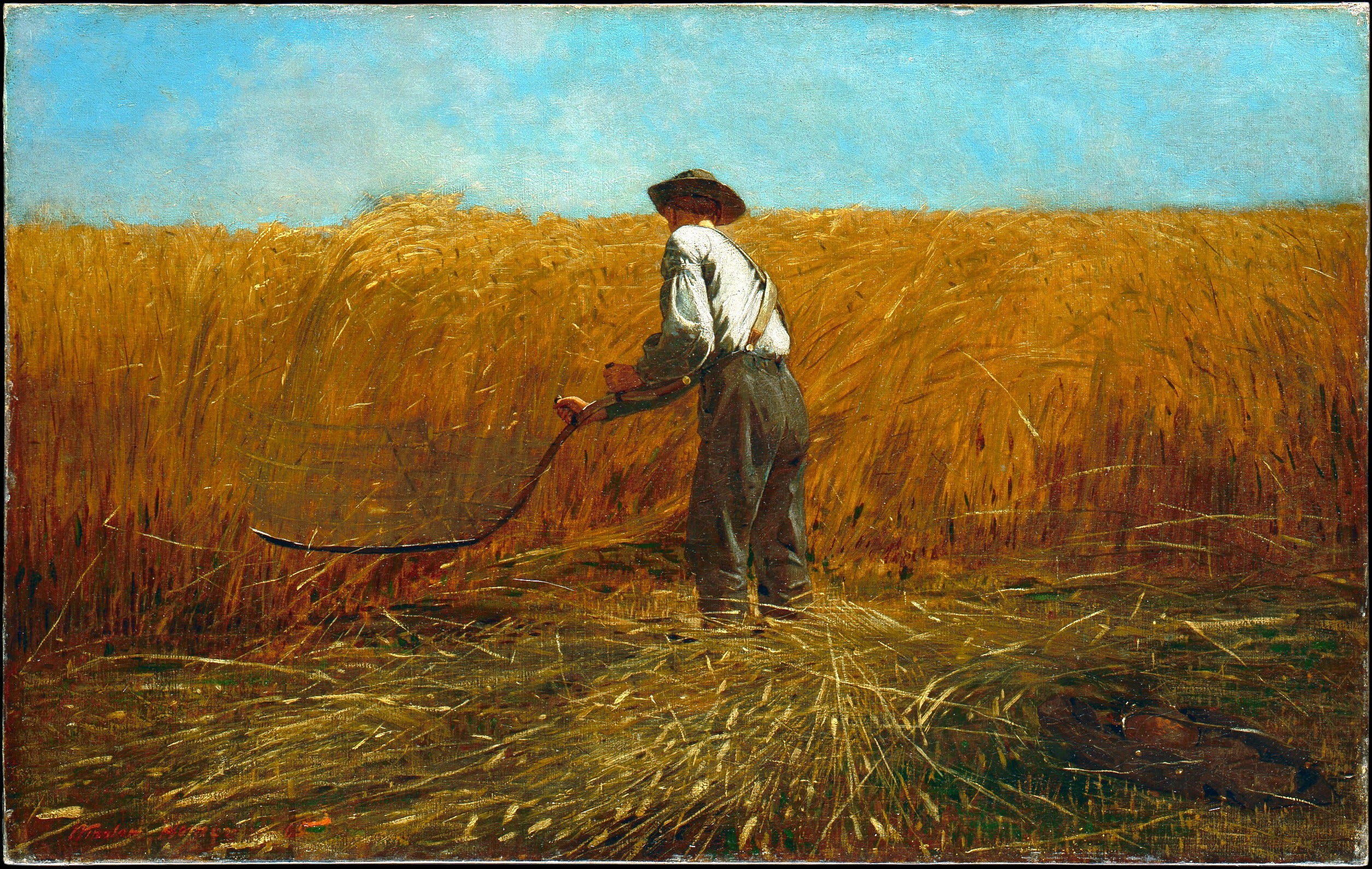
Winslow Homer, The Veteran in a New Field (1865) Source: Metropolitan Museum of Art
Reminder: I am using multiple translations; my main reading is from the hardbound copy of the Mansfield translation. When I refer to page numbers it’s to the Mansfield translation, and when I want to pull quotes that are longer I’ll use the online Schleifer translation, so the text may not match exactly but they are close (and I also read French so I calibrated across the translations to get comfy with Tocqueville’s word choice).
Democracy in America, Volume 2, Part III, Chapters 16-26
A society can be bustling with activity while resisting the institutions that channel it into change. People change jobs, start businesses, and chase improvement, and still remain attached to the customs and beliefs that shape their striving. In the closing chapters of Volume 2, Part III of Democracy in America, Tocqueville examines this combination of restlessness and caution, ranging across national vanity, honor, ambition, revolution, and war. The attention to honor and courage in these chapters channels some of the classical virtues, asking familiar questions about character: what do people admire, what will they risk, what do they pursue? As usual, though, he asks a more probing question relating virtue and character to democracy: what happens to these qualities once equality reshapes the conditions of ordinary life?
He opens with Americans’ hunger for praise, an appetite he finds more amusing than admirable. Visitors are expected to admire the country, and one compliment only invites a request for another. Tocqueville traces this vanity to the insecurity of democratic standing: people who have recently gained ground, and who sense they could lose it, want reassurance that others notice their success. The nation absorbs the same anxiety and wears it as pride.
In honor he sees a similar pattern with the same interest in social approval. Every society praises and condemns particular conduct, differing in the particulars according to circumstances and needs. A military aristocracy prizes battlefield courage and loyalty to a lord; commercial America prizes work, enterprise, and persistence. Courage changes similarly. The merchant risking a fortune, and the failed businessman starting over, display qualities their neighbors have reason to value, which is why Americans forgive bankruptcy so readily. A society depending on commercial risk-taking must leave room for failure, or it discourages the very enterprise on which its prosperity depends.
Social recognition and what is considered honorable shifts with circumstance. Work, once beneath a gentleman, becomes so respectable that even wealthy Americans feel pressure to hold an occupation. Ambition also shifts, but perhaps not in an expected direction. Equality lets people imagine rising, having removed the hereditary barriers that once fixed a person’s station, and more careers and accomplishments come within reach. Ambition spreads, partly for straightforward reasons: everyone else is chasing advancement too, competition is demanding, resources are finite, and building a livelihood takes time. People become absorbed in the next attainable improvement, leaving little energy for considering what else might be worth pursuing.
The resulting society looks both busy and repetitive, with individuals rising and falling while many pursue the same narrow range of success. Providing a comfortable life for a family is no small accomplishment. Still, his worry holds up: people grown accustomed to manageable goals can lose their willingness to attempt difficult or unfamiliar things. He does not want to extinguish ambition and he notices that institutions steer where it goes. Where private enterprise offers opportunity, people direct their efforts toward commerce and industry; where public employment offers the more promising route upward, they compete for government positions, with the entirely predictable result that government eventually attracts more applicants than positions, and no shortage of disappointed citizens.
Chapter 21 brings these observations together into an argument about revolution. Democratic people can be restless without wanting to overturn their social order. Those who own some property and hope to acquire more have practical reasons to value stability: their businesses, savings, and plans depend on it, and they would rather improve their position than put everything at risk. Tocqueville separates this stability from the upheavals that establish equality in the first place, arguing that the passions toppling an aristocratic order need not characterize democratic life afterward. His argument assumes that property and opportunity are widely available, and he is careful enough to recognize that America’s racial inequality could produce conflicts that ordinary commercial habits would not resolve.
His concern about the narrow scope of ambition extends to beliefs. Busy people have limited time to examine accepted ideas, and disagreeing with prevailing opinion can be uncomfortable, so they continue holding familiar beliefs without feeling especially certain that those beliefs are true. Everyday activity proceeds within boundaries that receive little scrutiny. Here Tocqueville’s real worry surfaces: not revolution, but its opposite. A desire to avoid revolution can harden into an unwillingness to consider reforms the common future actually requires, private life staying active while public life loses direction.
The military chapters end Part III and continue these themes. Citizens whose livelihoods depend on peace can raise an army despite that fact, with members who see war as an opportunity for advancement. The same ambition, under different incentives, opens positions and accelerates careers that move slowly in peacetime. War can summon courage and shared effort from people previously absorbed in private affairs, but Tocqueville distrusts relying on it to revive public spirit. Prolonged war enlarges government power and accustoms citizens to centralized direction, and the habits it creates can threaten the very freedom soldiers are called upon to defend.
His more hopeful answer lies in the practice of self-government, as per his main themes throughout the book. Participating in public affairs gives citizens reasons to look beyond their immediate concerns, along with genuine experience acting together. Democracy makes peaceful, productive private lives possible. Preserving that achievement, though, requires citizens willing to give some of their time, energy, and ambition to the society they share.